This week’s reading emphasized the community’s role in creating and fostering a love and education of art for young learners. The text notes that there is a large scope of programs “offering something for everyone and every budget” (Wright, 2012, p14) . We certainly saw that when we visited the NGV’s children’s art area where animation in particular was used to create an interactive space in Melbourne’s city that offered an enriching and engaging arts experience for children, that was free for all.
According to educational theorist John Dewey, in order for a child to learn, interest is the greatest motive (Garrison, 2012). Allowing children the opportunity to view artwork in a gallery can develop inspiration and a love for art which can then translate into their own artwork, a powerful learning device.
Vygotsky theorizes that children can only reach their full level of potential development (or zone of proximal development (ZPD)) when they are surrounded and supported by more expert learners, (Wright, 2012). This shows the key role that adults play in cultural art experiences for children. This should be considered greatly when working with early years students, as introducing students to community classes, other art teachers, local and international artists etc.. can have a huge impact on their social cultural/art education.
Art Experience:
- Ages 5 years
Responding:
- Show children a piece of work that was displayed at the gallery.
For example, Tom Robert's Shearing of the Rams
- Ask open ended questions about what is going on in the picture
- Ask children what catches their eye in the picture
- Ask children what types of colours and textures and lines that are used in the picture
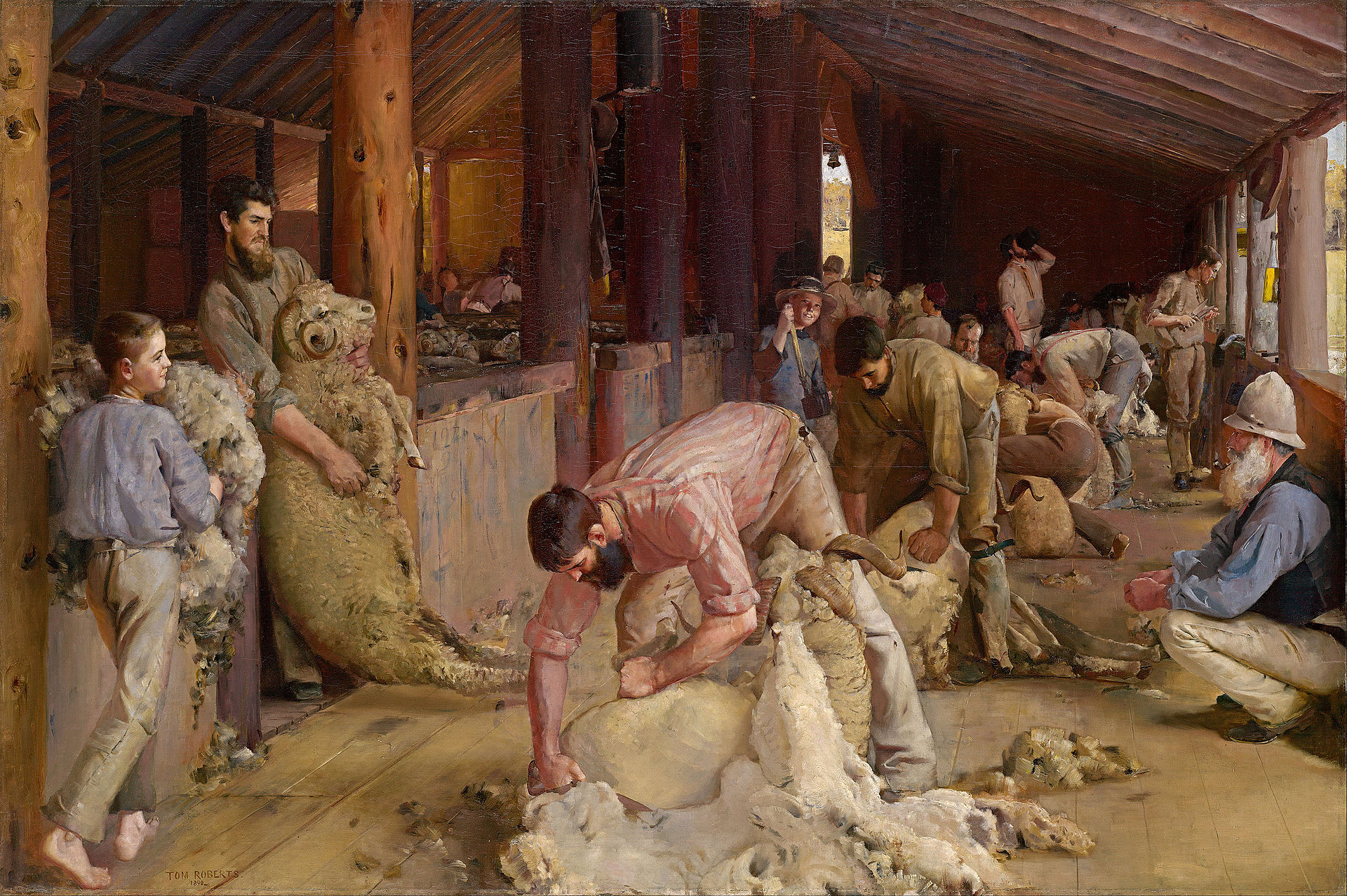
- Ask children to describe the colours, shapes, patterns, and objects (if any) that were in the painting.
Making:
- Acrylic paints
- Palettes
- Brushes
- Paper
Ask children to draw and paint something or somewhere that represents Australia to them. Can be somewhere nearby or somewhere local. Can include Australian animals etc..

No comments:
Post a Comment