Clay is a
fantastic medium through which young learners can create visual artwork that is
communicative in some way. This week’s reading emphasizes the role of art work
as a way of expressing child’s lives and interests and for them to tell others
what they see and how they think.
The reading emphasised how art experiences, and specifically art experiences using clay, can be a great form of expression for children to react and comment on the world around them. Clay can be used when students are in various phases of development. Younger children in Piaget's manipulative stage can simply move clay around and familiarise themselves with its texture and properties. As children “begin to build on their understandings about communication, symbols
and symbol making" (McArdle 2012), clay can be a new and exciting medium for children to use to create art that is symbolic and meaningful to them.
Specific teaching
is required in order for children to express their ideas, emotions and opinions
through visual arts. It is essential that the teachers connect communication and
visual arts together so children understand that it is a way to communicate and
express. Clay is a great way for students to do so.
It is
important to let the children experiment with clay, and let them know that they
do not always have to focus on an end product, but can just create shapes just
to learn to manipulate the clay. This sort of 'play' or 'artistic freedom' is supported by Dewey's theories regarding education, which championed the teacher's role of that a guide, rather than a task master (Garrison, 2012).
Art Experience:
Ages 4-5
Responding:
 Have the children study these clay sculptures by a local Mexican artist.
Ask the students open ended questions such as, where do you think the sculpted people are from? What do you think they are doing? Why do you think these sculptures were made?
Making:
Materials - Clay
Ask children to make a clay model of something that represents something special about themselves.
This allows students to express themselves and express their identity and sense of self through a visual arts experience.
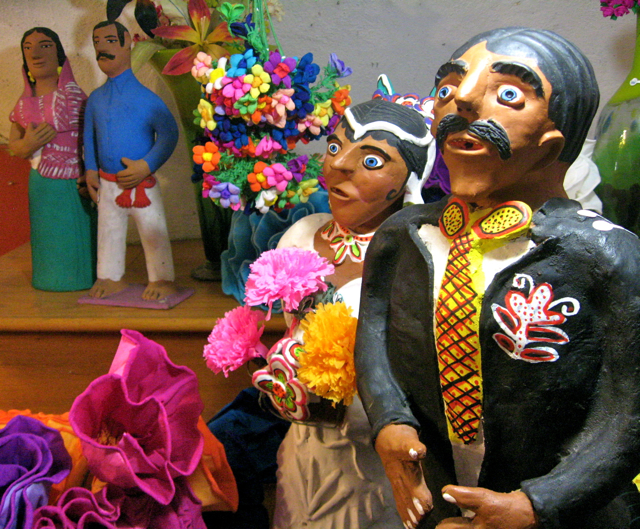 Have the children study these clay sculptures by a local Mexican artist.
Ask the students open ended questions such as, where do you think the sculpted people are from? What do you think they are doing? Why do you think these sculptures were made?
Making:
Materials - Clay
Ask children to make a clay model of something that represents something special about themselves.
This allows students to express themselves and express their identity and sense of self through a visual arts experience.

No comments:
Post a Comment